
8 Things That Nobody Tells You About Turning Your Creative Hobby Into a Business
There is a massive difference between loving what you do and making a living from it.
When drawing is just your hobby, you pick up your sketchbook whenever inspiration strikes. You can spend an entire afternoon experimenting with colours, start a new piece on a whim, or completely abandon a drawing simply because you aren't enjoying it anymore.
But turning that hobby into a creative business changes the game completely.
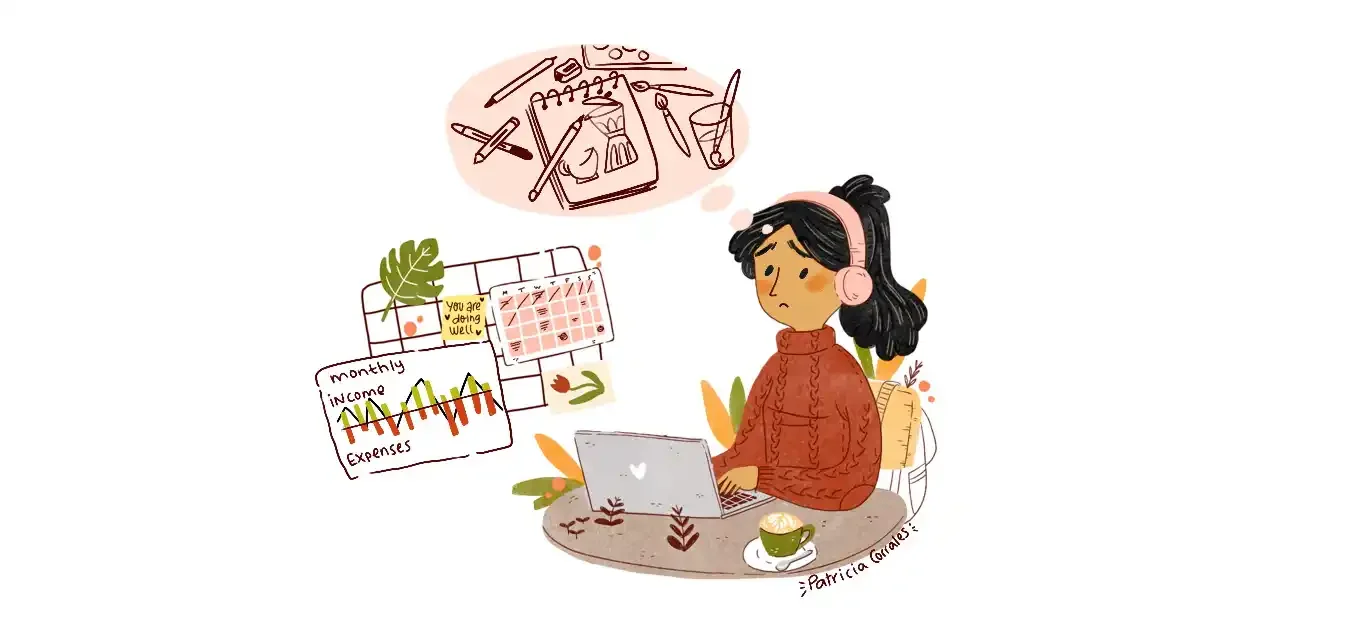
I found that your illustrations are not just about personal expression and drawing about the things you like, oh no, you have to balance emails, client management, invoices, deadlines, time management, admin and finances, the small matter of understanding international taxes if you want to sell your goodies abroad, for example.
As an illustrator, these are the things I wish someone had shared with me before I took the leap years ago:
1.Your business is not just about making art.
This is usually the biggest shock for new creative business owners.
You might start out because you love illustration, painting, or ceramics, but once it becomes a professional venture, making the work is only one part (sometimes a small part) of the job.
You quickly realise you need to wear multiple hats every single day: you are now your own accountant, social media manager, PR executive, website developer, and marketing specialist… so you need to take the time to learn about all of this in advance of the actual workflow starting.
2.You will probably spend less time creating than you expected
When I first imagined being a professional illustrator, I pictured myself drawing all day.
The reality is much more varied.
There are days when I can completely lose myself in an illustration. There are also days when my to-do list is full of emails, planning, website updates, bookkeeping and other tasks.
This can feel frustrating when the reason you started the business was simply because you wanted to create.
The trick is to protect time for your actual creative practice.
Even when there is no client deadline, drawing for yourself still matters. Personal projects, sketchbooks and experimentation can help you develop your skills and keep your creativity alive.
3. Not everything you create needs to be sold.
When your creativity becomes your primary source of income, it is brutally tempting to judge every single sketch by its commercial potential.
You find yourself constantly asking: Will people buy this? Will it get likes? Could I turn this into a print?
While those questions have their place, they cannot be the only reason you create. Sometimes you need to draw simply because you want to; those personal, unpaid experiments are often what lead to your next big breakthrough or a fresh direction.
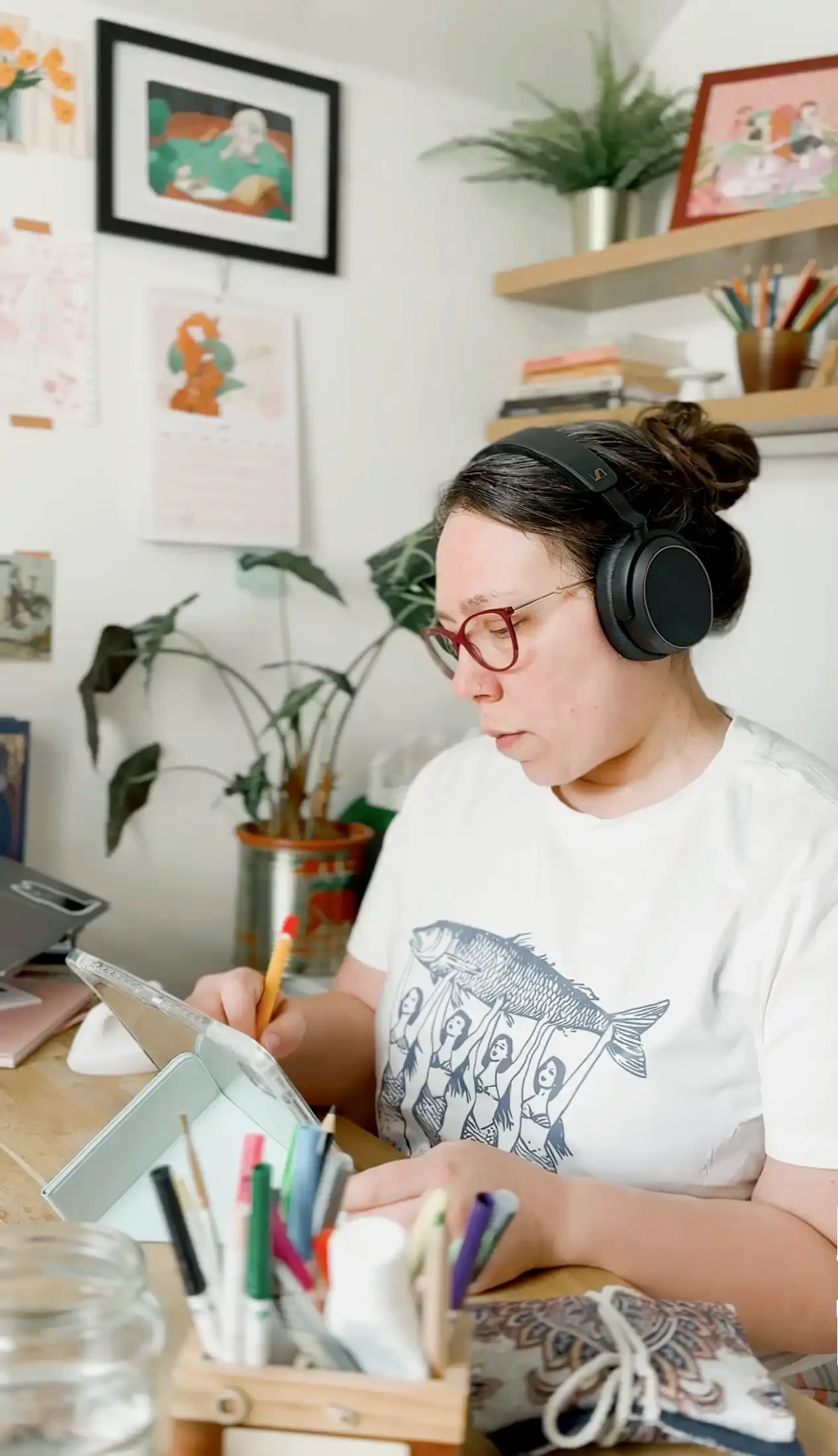
4.The social media comparison trap is real.
Platforms like Instagram and TikTok make this journey particularly tough.
It is incredibly easy to see another illustrator landing a major book commission, signing with a top agency, or selling out a collection, and suddenly feel like you are standing still while everyone else flies ahead.
But creative careers are never a straight line. Everyone has different circumstances, opportunities, and timelines.
Use others for inspiration, never as a measuring stick for your own worth.
5. Building an audience and income takes time.
There is an underlying expectation that once you announce you are a "professional creative," the work and the money will automatically follow.
Usually, they don’t.
Building a loyal audience, finding the right clients, and figuring out what you actually want to offer can take years. You will face quiet months followed by chaotic ones, and you will try things that fail completely. This doesn't mean your business is failing, it just means you are building a solid foundation.
6.You are allowed to change direction.
The business you start with does not have to be the one you run forever.
You might begin by selling art prints and stationery, only to discover later down the line that your true passion lies in editorial work, teaching workshops, or licensing your art to big brands.
Your interests, your skills, and your ideas of fulfilment will evolve as you grow. Pivoting your business model isn't inconsistency—it is natural, healthy growth.
7.You must define what success means to you.
It is dangerously easy to let algorithms, peers, or society define success for you. More followers, more sales, a massive studio, or a publishing deal.
But what do you actually want your creative life to look like? Maybe success simply means earning enough to work independently from your kitchen table, having the time to try new mediums, or building a small, slow business that allows you to enjoy life.
There is no single, correct path for a successful career.
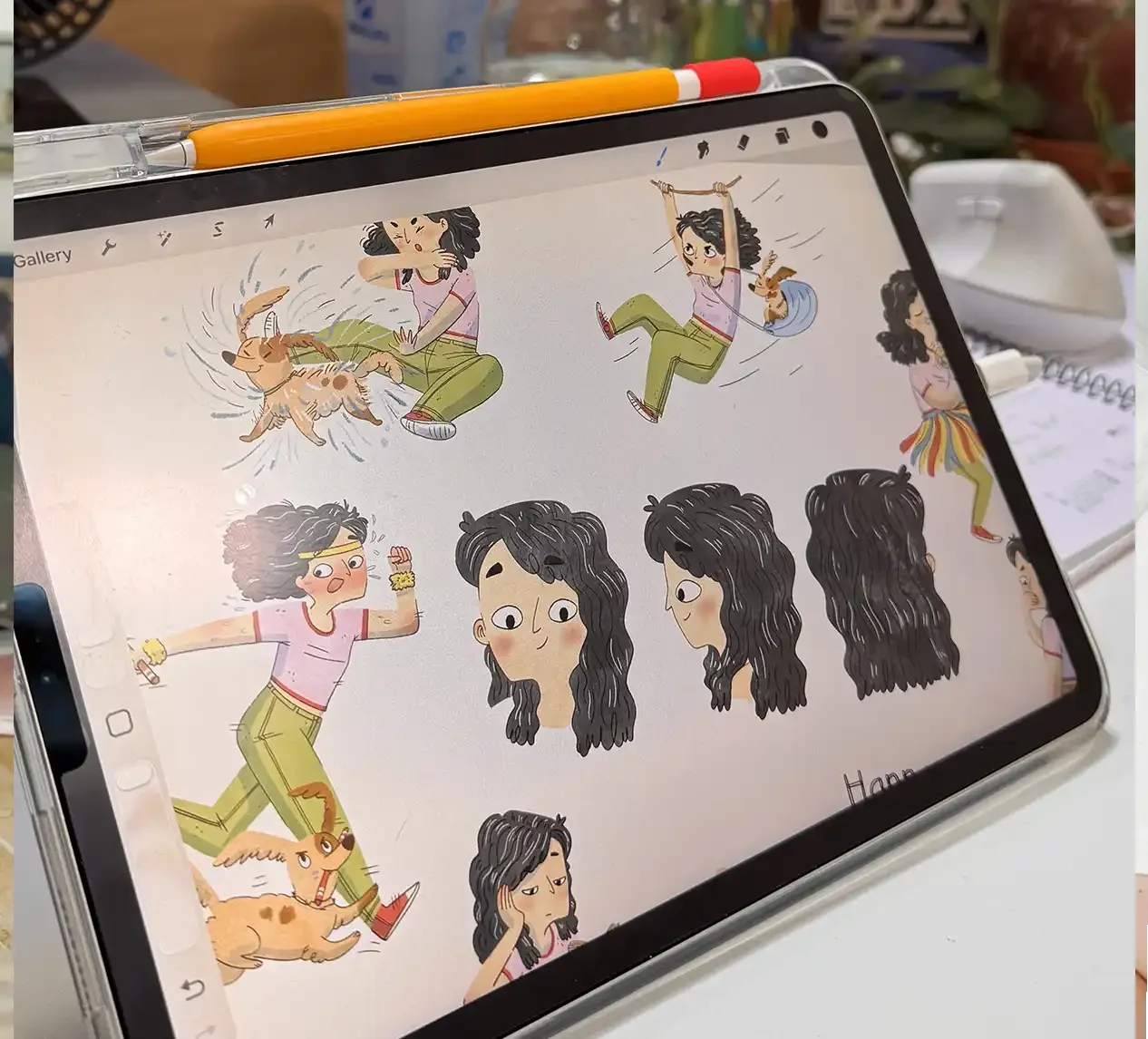
8.Your hobby can still be genuinely enjoyable.
I think the greatest fear when turning a hobby into a career is that the pressure will make you stop enjoying it altogether.
And yes, there will be difficult clients, tight deadlines you resent, and tedious admin days where creativity feels like a chore rather than play. But your passion isn't ruined; you are simply learning how to navigate a professional relationship with it.
You can still keep parts of your art entirely for yourself-go to a life drawing class, try a new material, and create things just because you love them.
Turning your passion into your profession is messy, unpredictable, and slow, but it gives you something completely unmatched: the opportunity to build a working life around something you genuinely care about.
You do not need to have it all figured out before you begin. Start creating, learn as you go, pay attention to what feels right, and never forget why you picked up that pencil in the first place.
